
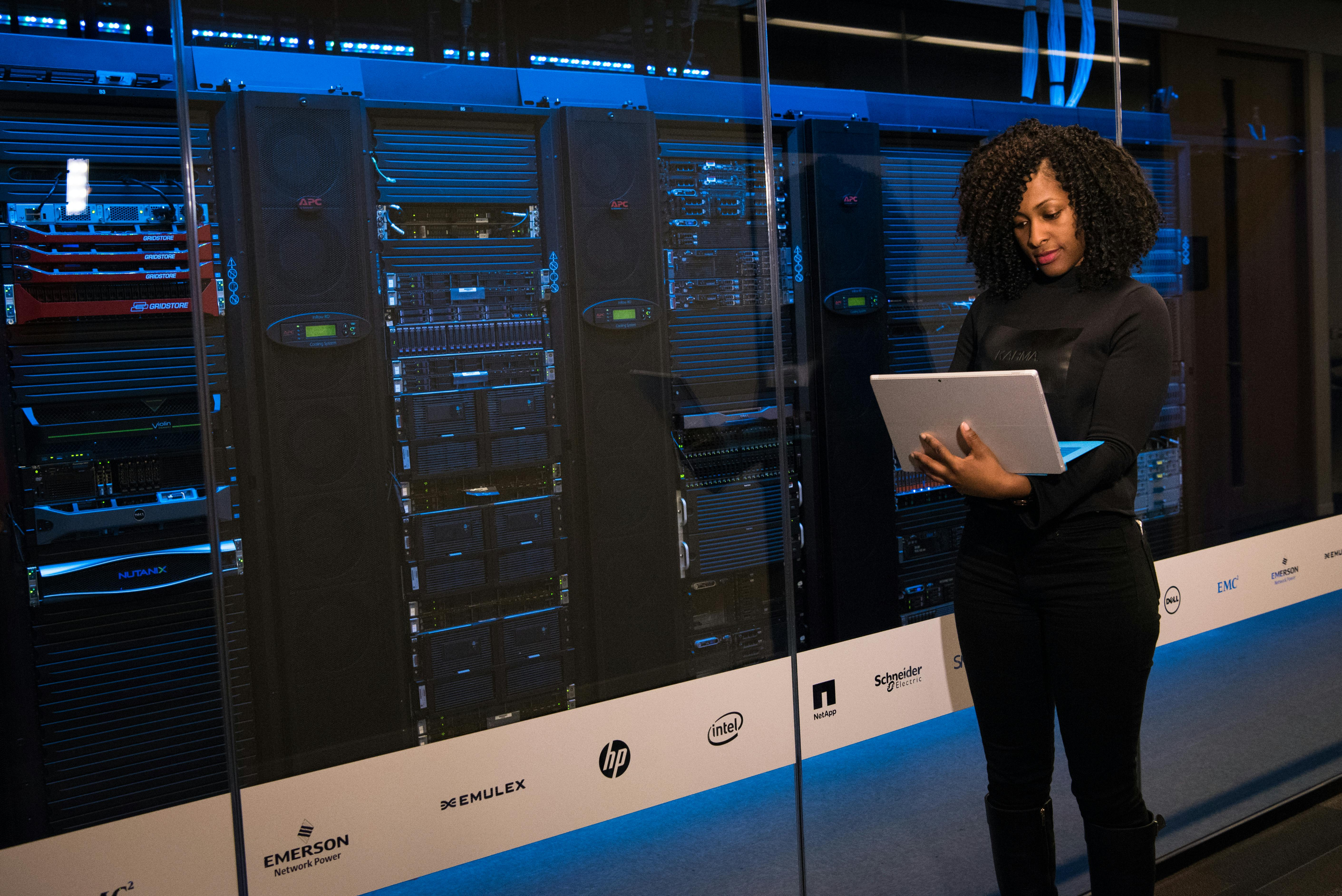

Advancing the AI Factory Sustainability


Winchester
Mon Sep 15 | 8:30am
Abstract
Learning Objectives
Data is king. Tremendous circularity opportunity to do Life Cycle Management from AI data migration. Energy is king. Train AI once, multiple use opportunity for Energy and Storage Management Built new or retrofit. It depends. Discuss architectural use cases
Download PDF

Related Sessions
Sustainability & Green
Energy Benchmarking for AI Storage
Energy availability, consumption, and associated externalities are a primary limiting factor for datacentre construction and operation. To improve visibility into the energy characteristics of AI - Training, inference and storage workloads, the MLCommons Storage Workgroup has developed a benchmarking methodology and an open source data analysis toolchain built on top of DMTF RedFish that characterizes different workloads tested in the MLPerf benchmarks. Benchmark results provide critical real-world insight to improve data centre power infrastructure design efficiency, reduce utility demand charges, and enable "what-if" planning when adopting new accelerators, storage and models.
This presentation will provide an overview of the MLCommons Power benchmarks, and will demonstrate how correlated load/power benchmarking can reveal important relationships between infrastructure utilization, energy efficiency, environmental impacts and data centre capex costs.

Sustainability & Green
Grading Storage Circularity: A Developer’s Framework for Measuring Device Health, Reuse, and Sustainability
As demand for storage accelerates, driven by AI - Training, inference, and large-scale data infrastructure, the industry faces a parallel challenge: how to extend the usable life of storage devices without compromising reliability.
The Circular Drive Initiative (CDI) has been developing a health grading framework designed to evaluate storage devices for reuse, redeployment, and circular lifecycle management. This session will present the technical foundations behind that framework, including how device-level telemetry (e.g., SMART attributes, error rates, workload history) can be normalized into a consistent, vendor-agnostic grading model.
We will walk through the architecture of the CDI health grading tool, including data inputs, scoring methodologies, and challenges in correlating device health signals with real-world reliability. The session will also explore how such a grading system can be integrated into storage management stacks, data center workflows, and procurement decisions.
Attendees will gain insight into the technical tradeoffs of designing a standardized grading system across heterogeneous storage media (SSD, HDD), and how developers can incorporate health-based decisioning into their own systems.
Familiarity with storage systems and device-level metrics (e.g., SMART data, endurance, error handling) is helpful but not required.

Sustainability & Green
Boring Is Brilliant: Building Supply-Resilient Enterprise Storage in a Constrained Memory and Flash Market
Persistent memory and flash supply constraints continue to disproportionately impact smaller enterprise customers. This talk argues that resilience comes not from differentiation, but from deliberate simplicity, ecosystem alignment, supplier diversity, and operational flexibility.
We examine why enterprise customers like GEICO are uniquely exposed to supply disruptions, often facing longer lead times, higher costs, and reduced access to constrained components. These challenges are amplified when server platforms rely on specialized or low-volume configurations that fall outside the Total Available Market (TAM) for server commodities.
We advocate for “boring” enterprise server hardware platforms, intentionally aligned with widely available, high-volume storage components. Designing to the commodity TAM increases supply predictability, reduces lifecycle risk, and preserves configuration flexibility in the face of shifting availability. In this model, standardization becomes a strategic advantage rather than a constraint. We will include examples of GIECO server platforms that have adopted this architecture.
We discuss supplier strategy, emphasizing the importance of broad flash vendor engagement. Enterprises that qualify and incorporate multiple flash suppliers reduce single-source dependency, improve access during shortages, and create competitive dynamics that help stabilize both cost and availability.
The final lever is enterprise customer flexibility itself. Organizations that can adapt across capacity targets, budget timing, vendor selection, and long-range forecasts materially improve their ability to secure supply. Flexibility in accepting alternative configurations, smoothing demand signals, and committing to longer planning horizons becomes a critical enabler in constrained markets.
Through real-world examples and field-driven insights, attendees will learn:
* Why memory and flash constraints disproportionately impact smaller enterprises
* How aligning server platforms with commodity TAM improves availability and resilience
* The role of multi-vendor flash strategies in mitigating supply risk
* How enterprise flexibility in capacity, budget, vendors, and forecasting can unlock supply advantages
Attendees will leave with a clear framework for designing supply-aware, vendor-diverse, and intentionally “boring” enterprise systems—demonstrating that in a constrained environment, flexibility and standardization are the true drivers of long-term success.

Sustainability & Green
Managing Power and Performance to Deploy AI Factory at Scale
This talk covers the design and architectural opportunities for sustainable and efficient AI Factory at scale
* Achieving Net Zero: Define and evaluate key categories of Greenhouse Gas Emission
* AI Factory Overview: Share the AI full stack spectrum and strategies that shape hardware and software choices
* In Deployment Refactoring: Innovative examples to prolonging AI Factory power, cooling and architecture
* Keeping Score: Lifecycle carbon measurement criteria
There’s no one‑size‑fits‑all. You’ll leave with three practical know‑how to maximize your AI Factory
Sustainability & Green
From Fragmented Data to Open Standards: Product Category Rules and LCA at Scale for IT Hardware
At SDC 2025, engineers and technologists from Meta, Microsoft, and Google made the case for open standards to measure the carbon footprint of IT hardware. That panel catalyzed two concrete outcomes: the creation of a new SNIA Sustainability Technical Work Group, and accelerated progress on the OCP Product Category Rules (PCR) for datacenter equipment.
This keynote presents the first results of that effort. The OCP PCR draft, co-developed by Meta, Google, Microsoft, AWS, and Fraunhofer IZM, establishes the industry's first consensus framework for hardware lifecycle assessment. It includes a standardized hardware taxonomy that defines consistent LCA boundaries, along with a Data Quality Scoring system aligned with WBCSD's PACT standard to grade supplier carbon data. Alongside the PCR, we introduce the LCA at Scale methodology, an open approach to automating embodied carbon assessment across hyperscale fleets that moves the industry from manual, per-product LCAs to scalable, data-driven estimation. We also report on the newly chartered SNIA Sustainability TWG, which is developing storage-specific intensity metrics and circularity standards. With 99% of IT hardware carbon sitting in Scope 3 and AI infrastructure scaling at an unprecedented pace, these open frameworks represent the technical foundation the industry needs for meaningful decarbonization.