






Liquid Cooling for SSDs
What is Liquid Cooling?
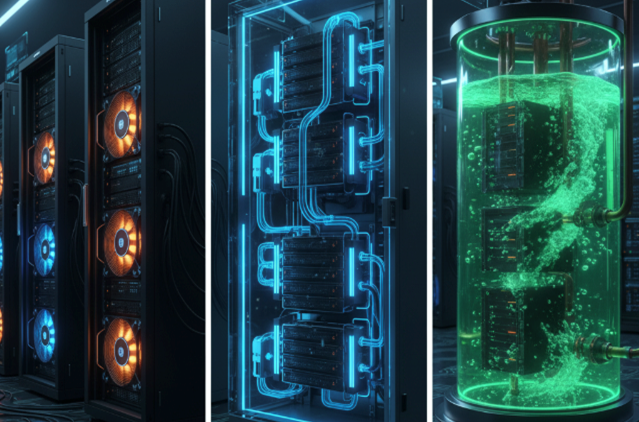
Liquid cooling is emerging as an important approach for managing increasing power densities in modern storage systems. As systems with more compute power grow, traditional air cooling methods may not be sufficient to maintain optimal operating temperatures in high-density environments.
Liquid cooling removes heat using a liquid medium rather than air and can be implemented in several ways, including direct contact with components or through system-level cooling infrastructure. Compared to air cooling, this approach can provide improved heat transfer efficiency, enable higher performance, and better support next-generation data center designs.
While SSDs are not driving the immediate need for liquid cooling, the benefit of liquid cooling enables performance and capacity gains that were going to be limited by air cooling.
SSD Cooling Method Comparison
Cooling Method | How It Works | Pros | Cons | Best Fit |
Air Cooling | Airflow across SSDs removes heat through convection | • Simple and widely deployed • Lowest upfront cost • Easy to maintain | • Limited cooling capacity • Higher fan noise • Less efficient at high density | Lower power deployments |
Direct Liquid Cooling | Liquid-cooled (cold) plate contacts SSD enclosure | • High thermal efficiency • Supports high-wattage SSDs • Reduces/eliminates fan usage • Hot swappable | • Plumbing complexity • Less efficient/dense vs. direct to chip | High performance racks |
Direct-to-Chip | Liquid-cooled plate contacts SSDs hot components | • High thermal efficiency • Supports high-wattage SSDs • Eliminates fan usage | • Plumbing complexity • Risk of leaks • Harder to hot swap | High-performance SSDs |
Immersion Cooling | Hardware submerged in thermally conductive liquid | • Maximum cooling density • Very energy efficient • Quiet operation | • High infrastructure cost • Fluid handling complexity • Heavier systems • Very difficult to hot swap | Extreme density deployments |
What is Being Cooled?
Current liquid cooling efforts primarily focus on Enterprise and Datacenter SSD Form Factors (EDSFF), including:
These form factors are designed to support higher power envelopes and improved thermal management capabilities required for next-generation storage systems.
Liquid-Cooling-Ready SSD Requirements
To support liquid cooling, SSDs may require specific design considerations, including:
• Hot component location
• Thermal interface contact points to host cold plate
• Mechanical alignment and mounting requirements
• Thermal transfer requirements
• Thermal interface materials
• Serviceability and accessibility
• Integration with system-level cooling infrastructure
Standards Work and Specifications
Additional Education and Resources
• Technical presentations
• Industry webinars
• Educational videos
• Related working group materials