





What Is a Hard Disk Drive (HDD)?
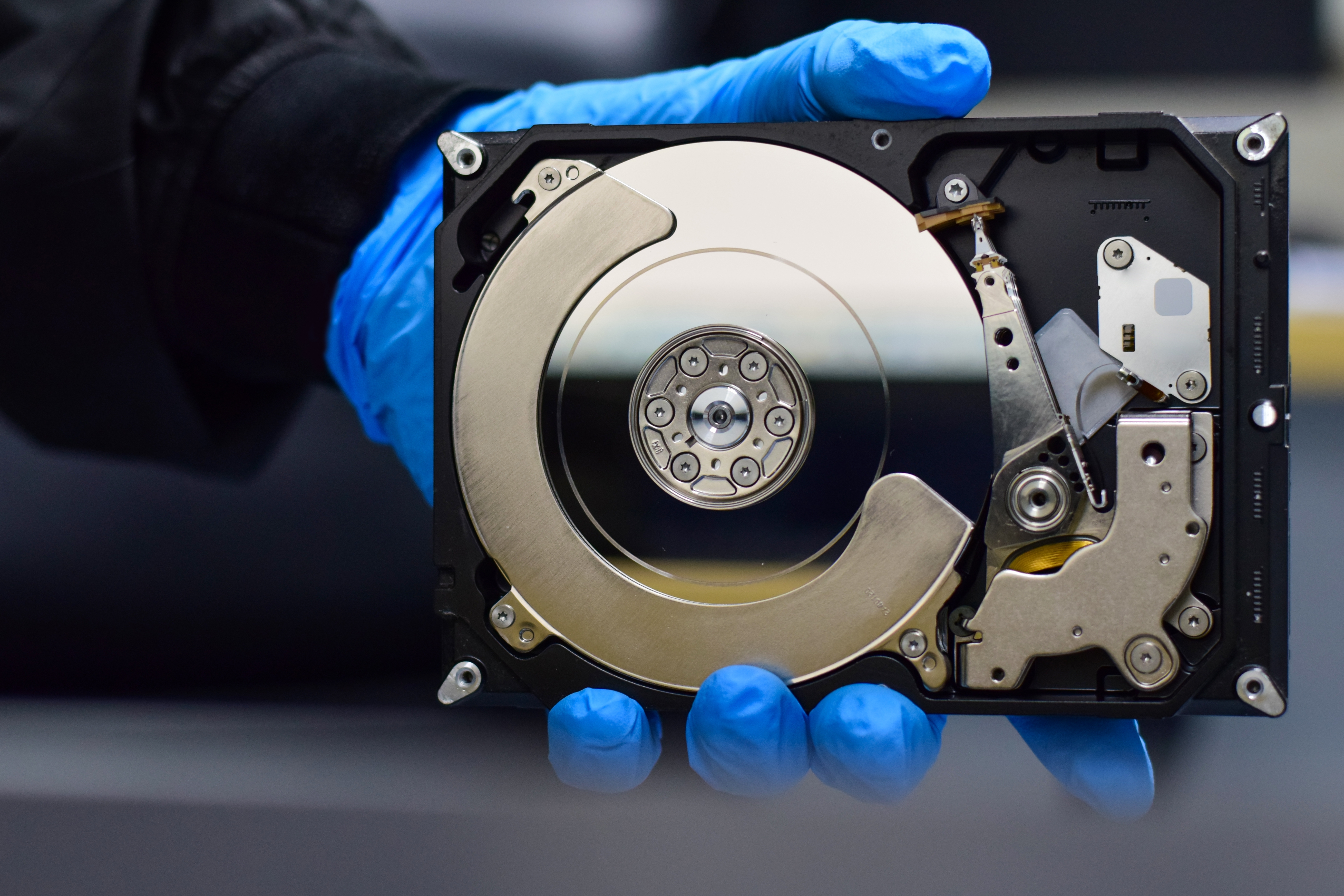
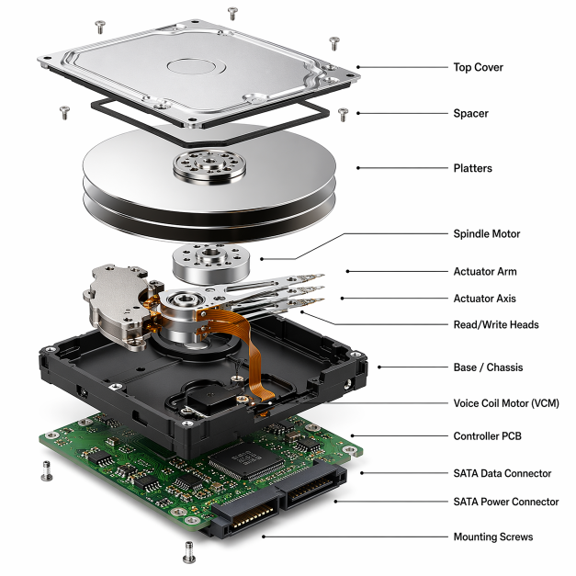
A Hard Disk Drive (HDD) is a non volatile data storage device that stores digital information on rapidly spinning magnetic disks, known as platters. Data is read from and written to the platters by magnetic read/write heads mounted on one or more actuator arms that moves across the disk surface. Because HDDs retain data without power and offer high storage capacity at low cost per terabyte, they remain a foundational component of modern storage infrastructures.
HDDs are widely deployed across consumer, enterprise, and cloud environments where scalable capacity, reliability, and economic efficiency are primary considerations.
Role of HDDs in Modern Storage Architectures
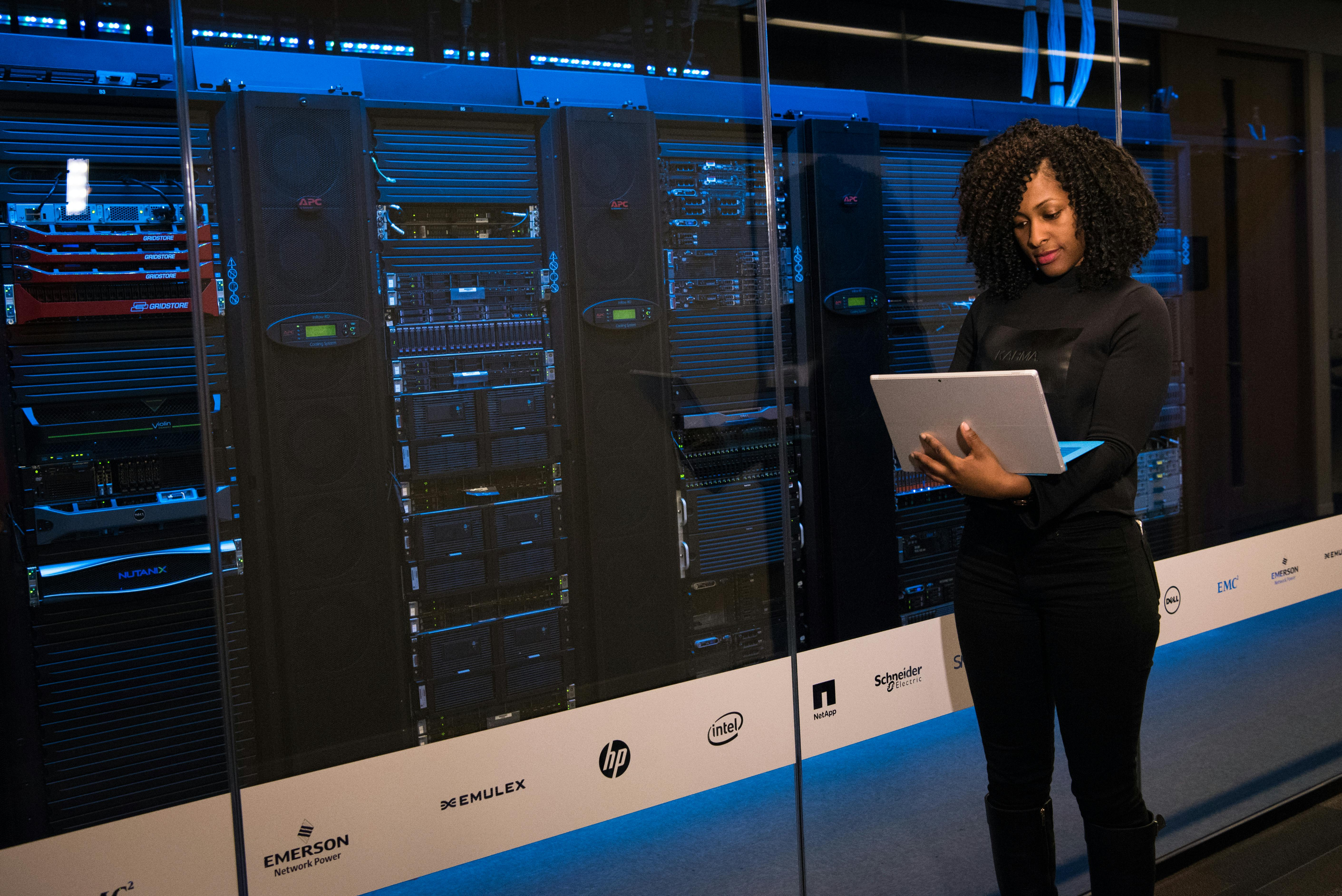
In contemporary IT environments, HDDs are commonly used as part of tiered storage architectures in which multiple storage technologies are combined to balance performance, capacity, and cost. Within these tiered storage architectures, HDDs typically serve as the capacity tier, storing large volumes of data that do not require the lowest possible latency but must remain readily accessible.
HDDs increasingly support large-scale, throughput-oriented workloads where data access patterns are optimized for sequential reads and writes. Common deployment models include block, file, and object storage systems connected via standard interfaces such as Serial ATA (SATA) and Serial Attached SCSI (SAS), enabling broad compatibility across servers and storage platforms.
HDD Use Cases in Data-Driven and AI-Enabled Environments
The rapid growth of data generated by cloud services, analytics, artificial intelligence (AI), and connected systems has reinforced the importance of HDDs as a scalable storage foundation. HDDs are widely used to store and manage:
- AI and machine learning datasets, including training data, feature repositories, and historical model data.
- Data lakes and object storage, which aggregate large volumes of structured and unstructured data for analytics and discovery.
- Backup and cyber-recovery data, supporting resilience against system failures, ransomware, and operational disruptions.
- Sensor data, such as video surveillance, scientific instrumentation, and telemetry streams.
- Regulatory and compliance archives, where long-term retention and cost efficiency are essential.
HDDs enable organizations to retain and analyze massive datasets economically, complementing higher-performance storage technologies used for latency-sensitive processing.
Sustainability and Efficiency at Scale
From an environmental and operational perspective, HDDs play a key role in enabling sustainable data growth. By delivering very high storage capacity per device and per rack unit, HDD-based systems can help reduce the physical footprint of storage infrastructure and lower energy consumption per terabyte stored. Because fewer devices are needed to store the same volume of data, deployments may benefit from reduced power and cooling requirements as well as lower material consumption at data center scale. As organizations increasingly evaluate storage solutions based on both economic and environmental impact, HDDs remain a critical enabler of efficient, large scale data retention.
Continued Relevance of HDD Technology
Although newer storage technologies offer significantly higher performance for latency sensitive workloads, HDDs continue to evolve and remain essential to modern storage strategies. Their standardized interfaces, proven reliability, and ability to support sustained growth in global data volumes ensure that HDDs will continue to complement other storage media rather than being replaced by them.
In modern infrastructures, HDDs serve as the capacity foundation beneath analytics platforms, AI pipelines, cloud services, and long term data repositories—supporting the world’s expanding digital footprint in a scalable, economical, and sustainable manner.
| Learning References | Applicable Standards | SNIA in Action |
| https://www.snia.org/education | https://sata-io.org/
| https://www.snia.org/sta |